A polished catalogue can make several rice suppliers look equally convincing. The differences usually appear later: the company receiving payment is different from the quotation issuer, a sample has no lot reference, or a promising price excludes a service your importer needs. Before your first order, turn the supplier’s promises into a short evidence file.
This checklist is for importers, distributors and private label buyers assessing a new relationship. It helps you decide what to verify; it does not replace destination-specific import checks or a contract reviewed for your transaction.
Start with the business behind the offer
- Confirm the contracting company. Ask for its full legal name, registration details, registered address and the person authorized to issue the offer. Compare these with the proforma invoice and intended contract.
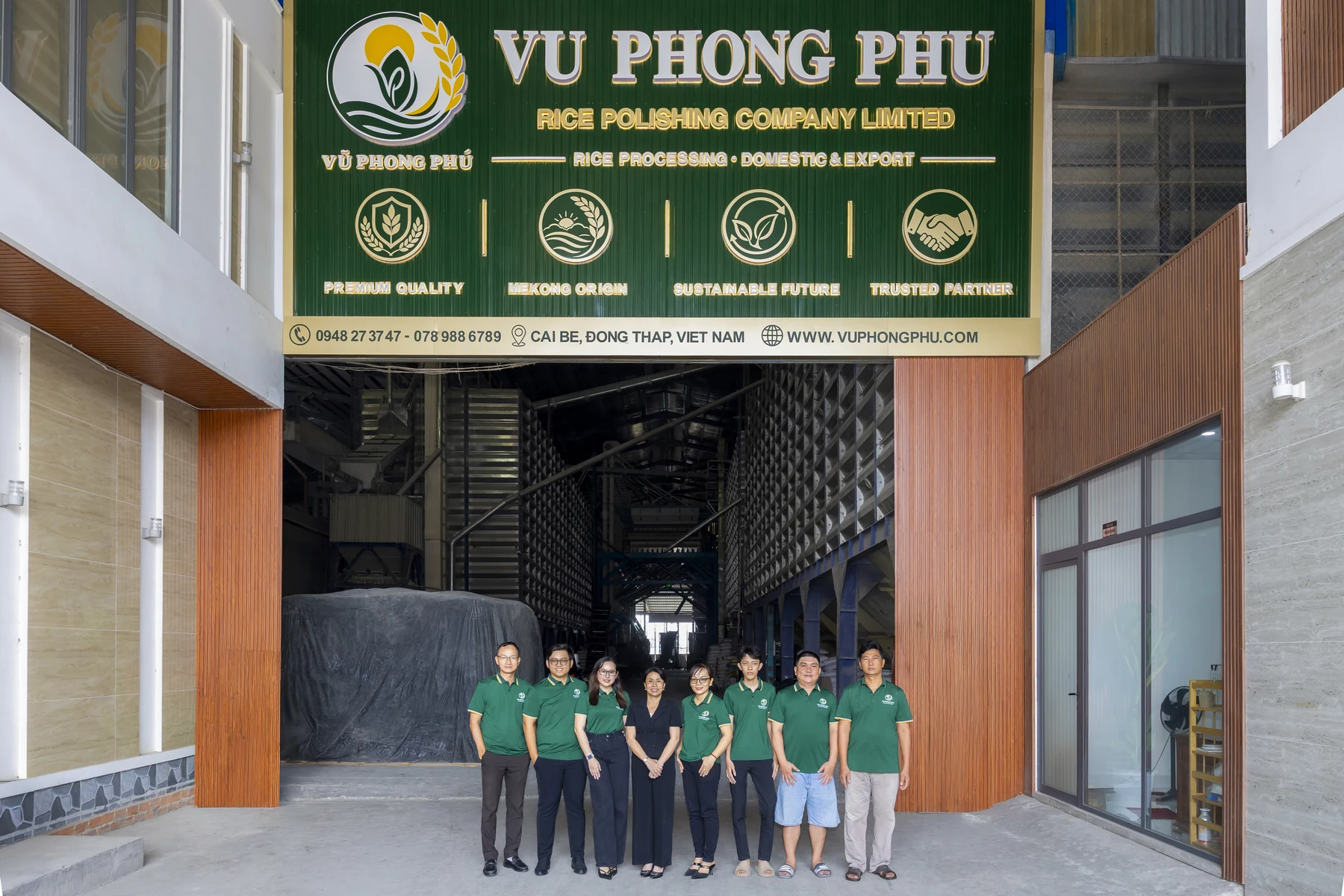
- Identify the processing site. Request the factory address and clarify whether the seller owns, operates or contracts the mill. A trading model can work well, but the parties should explain who controls production.
- Verify payment instructions independently. Resolve a different beneficiary name before transferring money. If bank details change, verify them through a previously established contact channel, rather than relying on the change notice alone.
Company history should be read precisely. Family milling experience, the incorporation date of a legal entity and the start of international sales describe different things. On our Vũ Phong Phú company page, the family’s rice milling roots are presented separately from the legal company identity.
Check control of the product you will receive
- Specify the exact rice. Record the variety or category, origin information, milling condition and intended use. A fragrant rice description alone does not define the same product across suppliers.
- Agree measurable quality requirements. Ask for a specification covering the characteristics that matter to you, including units, limits and the agreed test basis. “Premium quality” is not a usable acceptance criterion.
- Link the sample to its context. Request a sample identifier, preparation date and explanation of whether it represents available stock, a production lot or a proposed grade. Keep a sealed reference after approval.
- Review certification scope. Check the named organization, site, activities, listed products where relevant, issuer and validity. A certificate logo is not enough to show that your requested product falls within scope.
- Understand traceability and release. Ask how raw material, processing, packing and shipment records connect, and who authorizes release. Request a redacted example where commercial information is confidential.
ISO describes ISO 22000 as a food safety management system standard. That purpose is different from establishing every commercial attribute of a particular rice lot. Evaluate the system evidence and the product specification together.
Make the delivery promise concrete
- Separate capacity from allocation. Ask what production and packing slots can be reserved for your quantity. Installed daily capacity does not itself confirm an order’s ready date.
- Confirm packaging and label ownership. State the net weight, bag construction, artwork approval process, language requirements and responsibility for destination compliance. For custom packaging, agree how unused material will be handled.
- Name the handover point and documents. State the agreed trade term, named location, edition, shipping window and the document list established with your importer or broker. Avoid treating freight-inclusive pricing as a complete definition of responsibility.
- Agree the exception process. Identify the person handling delays or quality concerns, the evidence required, response timing and how disputed test results will be investigated.
Use a decision file, not a collection of logos
| Decision area | Evidence to keep | Unresolved question |
|---|---|---|
| Business identity | Legal details, contract issuer, verified beneficiary | Do the parties and payment route match? |
| Product approval | Specification, sample code, test record | What is actually approved for this order? |
| Production control | Site identity, process explanation, certificate scope | Who controls manufacture and release? |
| Delivery | Packaging approval, handover point, document matrix | What remains the buyer’s responsibility? |
Classify each item as confirmed, awaiting evidence or unacceptable. A supplier that clearly explains a limitation can be easier to plan with than one that agrees to everything. Hold unresolved critical items before committing to the order; address ordinary commercial choices through the quotation and contract.
Next, compare the responsibilities of a rice mill and a trading company, then use the rice RFQ template to request the same information from your shortlist.
To assess how your brief fits our processing operation, explore the Vũ Phong Phú factory and send your rice type, destination and order requirements through our contact page. We can then identify the product and supporting information to discuss.