
Your first rice import should begin with the destination, not with the lowest quoted price. Before a sample becomes an order, someone must establish whether the exact product can enter the market, which documents apply and how the shipment will move from the supplier to your warehouse.
This guide sets out the sequence for importing rice from Vietnam. It is a procurement roadmap, not a substitute for destination-specific clearance advice. Assign a competent importer or broker to confirm the current requirements for the product, origin and intended use before committing to shipment.
1. Define the destination and the importing responsibility
Identify the legal importing business, destination port or terminal, final delivery location and intended sales channel. Check the applicable tariff classification, import permissions, food requirements, plant-health controls, labeling and taxes with the relevant authorities or your broker.
The checks may differ for paddy, milled rice, specialty rice or a blend. Do not assume a document list used for a previous product or country applies unchanged. Record the authority consulted, the date, the exact product description and any outstanding condition.
The IPPC adopted standards provide the international plant-health framework. They do not replace the importing country’s requirements for your specific consignment.
2. Send an RFQ that lets suppliers quote the same requirement
State the variety or product category, specification, quantity, packing format, destination and preferred delivery arrangement. Include the required arrival window, rather than only the date you would like production to begin. Identify mandatory documents early so their availability can be discussed before a price is treated as complete.
Use the rice RFQ template to organize the request. Ask suppliers to flag deviations explicitly. A quotation for a different variety, bag material or testing scope should be recorded as an alternative, not silently compared with the original requirement.
3. Evaluate the supplier and the actual rice sample
Check the supplier’s legal identity, role in the supply chain, facility information and available quality documents. Understand which activities are carried out by that business and which involve another partner. A website photograph alone cannot establish production responsibility or the origin of a shipment.
Evaluate identified samples under consistent conditions. Record appearance and cooking observations together with the specification and sample code. Decide which characteristics determine acceptance, how the shipment will be sampled and what happens if results differ. Approval of one small sample is useful evidence of suitability, but it does not automatically verify every later lot.
4. Convert the quotation into a complete order agreement
Confirm the approved product, specification, packaging, quantity basis, price currency, validity, payment arrangement and delivery term. State the named location and the Incoterms edition. Agree any inspection, testing, document and claim requirements in writing.
The ICC’s Incoterms® 2020 rules allocate delivery responsibilities, costs and risks. They do not by themselves settle every commercial issue in a purchase contract. Read the FOB and CIF quotation guide before assuming that a seller-paid freight charge also means seller-held transit risk.
5. Build a production, inspection and document schedule
| Milestone | Evidence to confirm |
|---|---|
| Product approval | Specification version and reference sample |
| Packaging approval | Pack specification and approved artwork if applicable |
| Production readiness | Confirmed scope and realistic production window |
| Pre-shipment checks | Agreed inspection or test records tied to the lot |
| Document review | Drafts checked for consistency and destination needs |
| Shipping handover | Booking, container details and transport-document plan |
Assign an owner to each milestone. Discuss the point at which changes become costly or affect the booking. If an inspection or official document is needed, make its timing part of the schedule rather than requesting it after the goods are already moving.
6. Verify the shipment handover
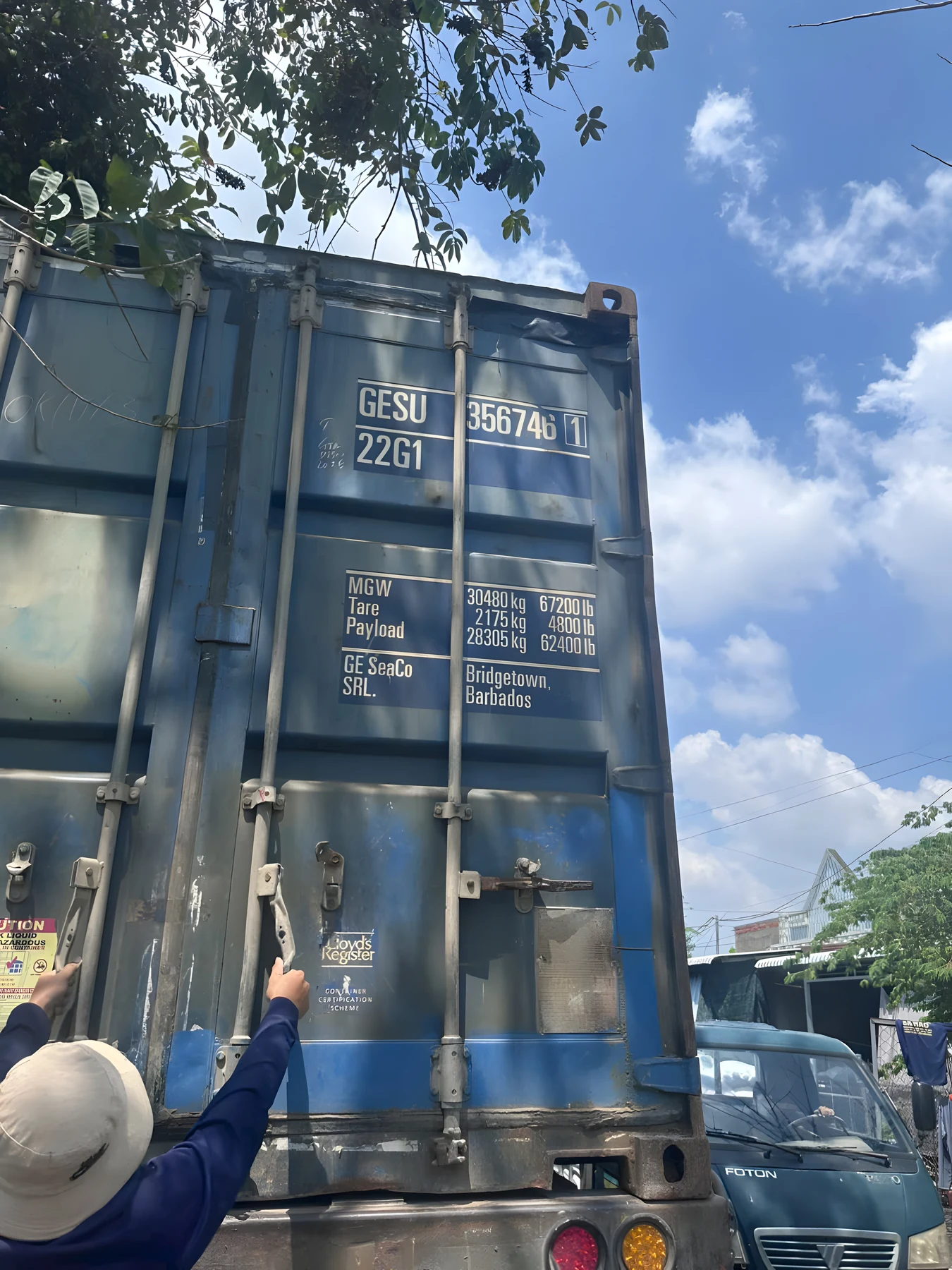
Before loading, confirm the agreed packaging, lot identification, quantity, container condition and any loading records. Check that the carrier and forwarder instructions match the contract. Container capacity should be confirmed for the actual equipment, route and weight restrictions; do not assume every container takes the same rice payload.
Review document drafts against the order and booking. Names, goods descriptions, weights, marks and shipment references should agree where relevant. The export documents checklist explains the purpose and limits of individual records.
7. Prepare arrival and record what you receive
Share the required documents with the importer or broker in time for clearance. Confirm destination charges, release arrangements, collection timing and storage readiness. A sea arrival date is not the same as the date the goods will be available in your warehouse.
At receipt, record seals, packaging condition, quantities, lot codes and any visible damage. Follow the agreed procedure for sampling and reporting concerns, retaining relevant photographs and records. Avoid mixing disputed goods into general stock before the issue has been documented.
Use the first shipment review to improve the next order: which specification points were unclear, which documents arrived late, and which costs were missing from the budget? Procurement becomes more predictable when those lessons are written into the repeat-order brief.
Planning a rice shipment from Vietnam? Review Vũ Phong Phú’s export coordination and share your destination, product, volume, packaging and preferred delivery terms. This gives the discussion a concrete scope from the first enquiry.